Navigating systemic risk, algorithmic governance, and global policy architecture.

Dr. Wahid Salih

20+ years of experience in strategic analysis, crisis management, and artificial intelligence.

I bridge the gap between theoretical frameworks and real-world implementation. Operating at the intersection of international policy, financial markets, and AI governance, I provide strategic intelligence for deciphering complex global challenges. My work focuses on how systems function, evolve, and generate systemic shifts.

“Understanding systems not only by how they function, but by how they produce knowledge, risk, and decisions.”

What I Work On

  • Global Governance & Institutional Architectures
  • AI & Algorithmic Systemic Risks
  • Financial Markets & Macro-Resilience
  • Strategic Knowledge Management

Current Focus

  • Designing governance models for autonomous AI systems.
  • Analyzing epistemic risks in digital-first financial markets.
  • Advising multilateral institutions on strategic foresight.

⚡ The Cognitive Sandbox

Experience the systemic risk of Algorithmic Homogeneity vs. Diversity in real-time in our financial crash simulator.

Launch Simulator 🚀

📊 The SIAD Calculator

Calculate your institution's sovereign algorithmic resilience score based on the Salih Index for Algorithmic Diversity (SIAD).

Calculate Score 📈

For advisory engagements, policy consultations, or speaking inquiries, please reach out to explore potential collaborations.

Connect

01. Background & Methodology

With over 18 years of experience serving at a Permanent Mission to the United Nations in Geneva, I operate as a practitioner and a strategic thinker at the nexus of global policy, finance, and technology. My career is defined by the translation of high-level multilateral objectives into concrete, actionable frameworks.

My academic foundation—spanning a Doctorate in Business Administration (DBA), an MBA, and advanced studies in Economics—equips me with a deeply multidisciplinary lens. I do not view global challenges in isolation; rather, I analyze them as interconnected networks. A core pillar of my analytical method is the concept of reflexivity—the understanding that our perceptions of systems actively alter the systems themselves. This framework is crucial for understanding volatility in financial markets, the deployment of algorithmic systems, and the shifting paradigms of global governance.

I focus rigorously on how problems are framed and analyzed. By bridging deep theoretical rigor with real-world institutional systems, I identify not just the symptoms of global crises, but the underlying systemic drivers. Whether navigating AI governance or analyzing epistemic risk, my objective is to provide clarity, strategic foresight, and sustainable policy solutions in an increasingly complex world.

02. Insights & Analysis

AI & Algorithmic Systems

The Architecture of Algorithmic Governance

The rapid deployment of artificial intelligence is outpacing the multilateral frameworks designed to manage it. We are moving from a paradigm of deterministic risk to one of algorithmic uncertainty, requiring an entirely new architecture of global governance.

  • Current regulatory models apply linear solutions to non-linear technological acceleration.
  • Algorithmic systems generate epistemic risks, fundamentally altering how societies agree on truth and policy.
  • Sustainable AI governance requires built-in reflexivity and adaptive, real-time oversight structures.

To mitigate algorithmic risks, policymakers must stop regulating AI as a static tool and begin governing it as a dynamic, evolving system.

Policy Framework:

Our proposed framework shifts the burden of proof to algorithmic developers to demonstrate systemic safety. This requires high-frequency auditing, algorithmic reflexivity assessments, and international reporting standards similar to Basel III for financial institutions.

View Analysis
Financial Markets & Risk

Epistemic Risk in Modern Finance

Modern financial markets are no longer just systems of capital allocation; they are vast, algorithmic information processing engines. When the mechanisms of knowledge creation within these markets become distorted, systemic risk inevitably follows.

  • Financial models increasingly suffer from reflexivity, where the model's predictions alter the market itself.
  • The over-reliance on algorithmic trading introduces novel forms of fragile, correlated risks.
  • True resilience requires understanding the gap between market data and underlying economic reality.

Navigating future financial crises will demand a profound understanding of how markets construct, validate, and sometimes distort knowledge.

Policy Framework:

Epistemic resilience must be built into market architecture. This involves decentralized validation protocols and transparency mandates on algorithmic training data to ensure cognitive diversity in market outcomes.

View Analysis
Governance & Policy

Institutional Resilience in the 21st Century

Multilateral institutions built in the 20th century are struggling to manage the polycrises of the 21st. To remain relevant, global governance must shift from reactive crisis management to proactive systemic foresight.

  • Legacy institutions are optimized for efficiency rather than resilience and adaptability.
  • Global policy must actively incorporate strategic foresight to manage overlapping, compounding crises.
  • The next generation of global agreements must be flexible, data-driven, and continuously iterative.

The survival of international policy frameworks depends on their capacity to adapt to rapid, continuous, and systemic global changes.

Policy Framework:

We advocate for 'Modular Multilateralism'—a structure where organizations can spin up agile, data-driven task forces to address emerging polycrises without the gridlock of traditional institutional inertia.

Strategic Analysis

Ongoing Analysis...

Leveraging the multidisciplinary framework established above, continuing pieces deconstruct structural shifts across domains.

03. Books & Publications

🏛️
Officially Published on SSRN (Elsevier) August 2026 · 78 Pages Monograph · Abstract ID: 7143099

Toward a Theory of Algorithmic Financial Cognition: Implications for AI-Driven Finance and Financial Governance

This foundational theory reframes artificial intelligence in global finance not merely as a computational tool, but as an autonomous cognitive infrastructure governing the generation of financial knowledge, decision-making, and unpriced systemic risks.

🏛️ View on SSRN & Cite Paper 📖 Read Web Edition & IEEE PDF 🌐 النسخة العربية الكاملة

Video Series: AI-Driven Markets

Episode 01
Introduction: The Cognitive Collapse

In this first episode, we explore the foundational concepts of the book...

Episode 02
Speed vs. Market Stability

Analyzing how algorithmic trading transforms market logic...

Episode 03
The Myth of Smart Markets

Exploring the inherent flaws in the concept of perfectly efficient...

Episode 04
Mathematical Correlations Do Not Create Understanding

Why mathematical models fail to build true market comprehension...

View Full Series
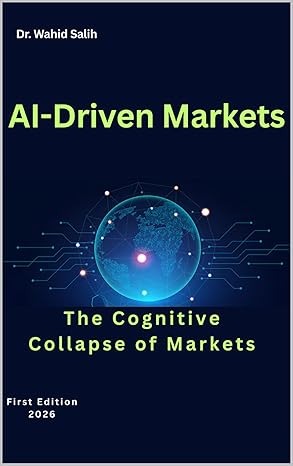
AI-Driven Markets

AI-Driven Markets: The Cognitive Collapse

Analyzing the potential for systemic cognitive collapse in global financial structures driven by complex AI mechanisms.

Download on Amazon
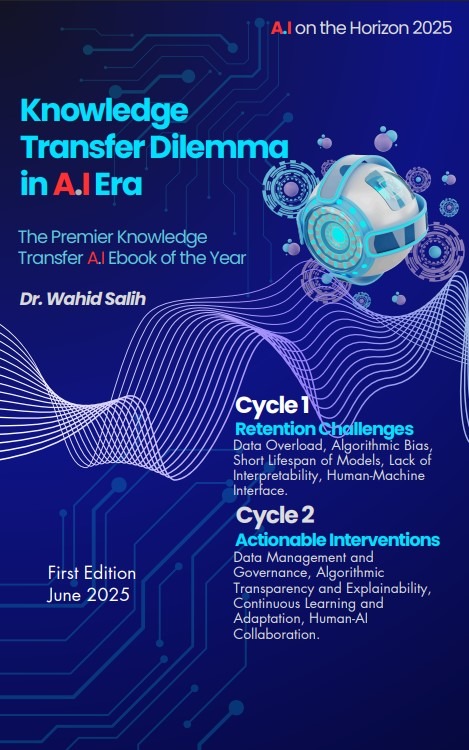
Knowledge Transfer Dilemma in AI Era

Knowledge Transfer Dilemma in AI Era

A premier analysis of the critical retention challenges and actionable interventions within knowledge transfer systems in the age of AI. (Cycles 1 & 2)

Download on Amazon

Video Series: Cybersecurity for Artificial Minds

شاهد الحلقة في غرفة العرض التفاعلية
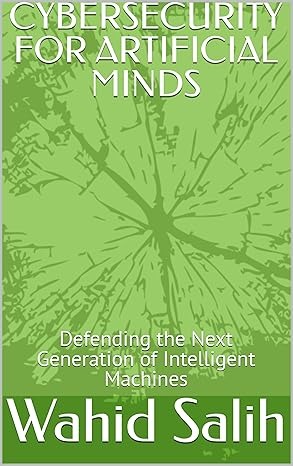
Cybersecurity for Artificial Minds

Cybersecurity for Artificial Minds

Defending the Next Generation of Intelligent Machines. A strategic guide to protecting intelligent systems in the age of algorithmic warfare.

Download on Amazon

05. Establish Contact

I am actively open to strategic advisory roles, speaking engagements, and collaborative policy initiatives. Let us connect to discuss how we can navigate complex systems and design robust, forward-looking frameworks.